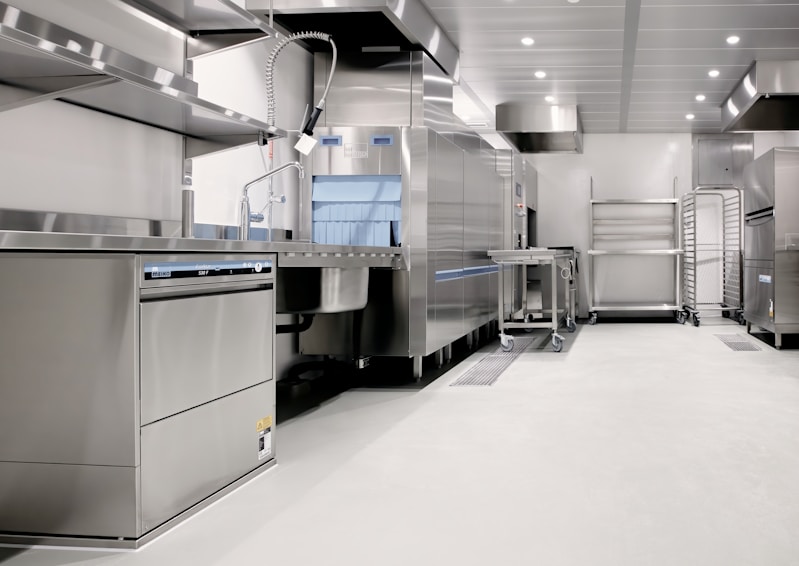
Commercial kitchen ventilation is one of the most critical aspects of restaurant design, directly impacting food safety, employee health, and regulatory compliance. A well-designed ventilation system removes heat, smoke, grease, and odors while maintaining comfortable working conditions.
Understanding Ventilation Requirements
The ventilation needs of a commercial kitchen depend on several factors:
- Cooking equipment types: Grills, fryers, and char-broilers generate significantly more heat and smoke than steamers or ovens.
- Kitchen size and layout: Larger kitchens with multiple cooking lines require more extensive ventilation systems.
- Local building codes: Different regions have specific requirements for exhaust rates and hood designs.
Hood Selection and Sizing
The exhaust hood is the heart of any commercial kitchen ventilation system. Key considerations include:
- Hood type: Wall-mounted canopy hoods, island hoods, or proximity hoods each suit different kitchen layouts.
- Overhang dimensions: Hoods should extend 6-12 inches beyond cooking equipment on all sides.
- Capture velocity: The speed at which air enters the hood must be sufficient to capture cooking effluents.
Make-Up Air Systems
For every cubic foot of air exhausted, replacement air must enter the building. Without proper make-up air:
- Negative pressure can make doors difficult to open
- Exhaust efficiency decreases dramatically
- Energy costs increase as conditioned air is pulled from dining areas
Grease Filtration
Effective grease removal is essential for fire safety and system maintenance:
- Baffle filters: Standard option requiring regular cleaning
- Cartridge filters: Higher efficiency but more expensive
- UV systems: Break down grease particles for reduced buildup
Energy Recovery
Modern ventilation systems can recover heat from exhaust air to pre-condition incoming make-up air, reducing HVAC costs by up to 30%.
Maintenance Planning
Regular maintenance is non-negotiable for commercial kitchen ventilation:
- Daily filter checks and cleaning
- Monthly ductwork inspections
- Quarterly professional deep cleaning
- Annual system performance testing
Conclusion
Investing in properly designed and maintained kitchen ventilation protects your staff, customers, and business while ensuring compliance with health and safety regulations.